
The Real-Life Problem:–
Indoor seedlings growing excessively tall, thin, and weak, often flopping over before they are ready to be planted outside.
Why Readers Search for This:
Gardeners often panic when their carefully planted seeds sprout into pale, fragile threads that lean desperately toward the nearest light source. They need immediate, actionable triage to save their plants.
Exactly Five Main Actionable Points:
- Diagnose the exact cause of the stretch (light deficiency).
- Perform emergency repotting by burying the stems deeper.
- Optimize light distance and daily duration.
- Introduce gentle mechanical stress (airflow) to thicken stems.
- Adjust soil moisture to prevent root rot during recovery.
Realistic Everyday Situation:– You check your seed trays a week after planting, only to find your tomato and pepper sprouts are three inches tall, pale green, and falling over the edges of their cells because they are reaching for the weak sunlight coming through a nearby window.
Tall, thin tomato seedlings leaning sideways in a black plastic seed starting tray, a common problem for gardeners needing to fix leggy seedlings.
How to Fix Leggy Seedlings (And Prevent Them From Stretching)
Starting your own seeds indoors is incredibly rewarding right up until the moment your tiny plants start looking like pale, floppy strings. If you wake up to find your seedlings stretching out, growing unusually tall, and falling over under their own minimal weight, you are probably wondering how to fix leggy seedlings before it is too late. This is a common hurdle in indoor gardening, but it is completely reversible.
This is one of the most common hurdles in indoor gardening, especially for early-season tomatoes, peppers, and brassicas.The good news is that if you catch the problem early, it is entirely reversible. You do not need to throw your seed trays away and start over. By understanding exactly what your plants are searching for and making a few strategic adjustments to their environment, you can rescue your fragile sprouts and encourage them to develop the thick, sturdy stems they need for the garden.
1. Diagnose the Root Cause Before You Fix Leggy Seedlings
Seedlings do not grow tall and thin by accident. This rapid, vertical growth is an evolutionary survival mechanism called etiolation. When a seed sprouts under a canopy of leaves—or in the middle of your living room—and does not sense enough light, it uses all its stored energy to stretch rapidly upward, desperately trying to break through the shade. “To successfully fix leggy seedlings, you must first correct this lack of intense, direct light.”
The Window Sill Myth
Many beginner gardeners assume a bright, sunny, south-facing window is perfect for seed starting. Unfortunately, modern window glass often filters out a significant portion of the UV spectrum. By the time the sunlight reaches your seed trays,its intensity is drastically reduced. Furthermore, the light is directional. Seedlings will exert all their energy bending toward that single pane of glass rather than growing strong, upright stems.
Heat Without Light
Another common trigger for leggy seedlings is leaving your seed trays on a heated germination mat for too long. Heat mats are excellent for encouraging stubborn seeds to sprout. However, if the soil remains artificially warm after the seeds have germinated, the plants assume it is late spring and attempt to grow rapidly. If this high heat is paired with low light intensity, the seedlings will shoot up overnight, resulting in fragile, water-filled stems that cannot support their first set of true leaves. As soon as 50% of your seeds break the surface of the soil, the heat mat should be unplugged.
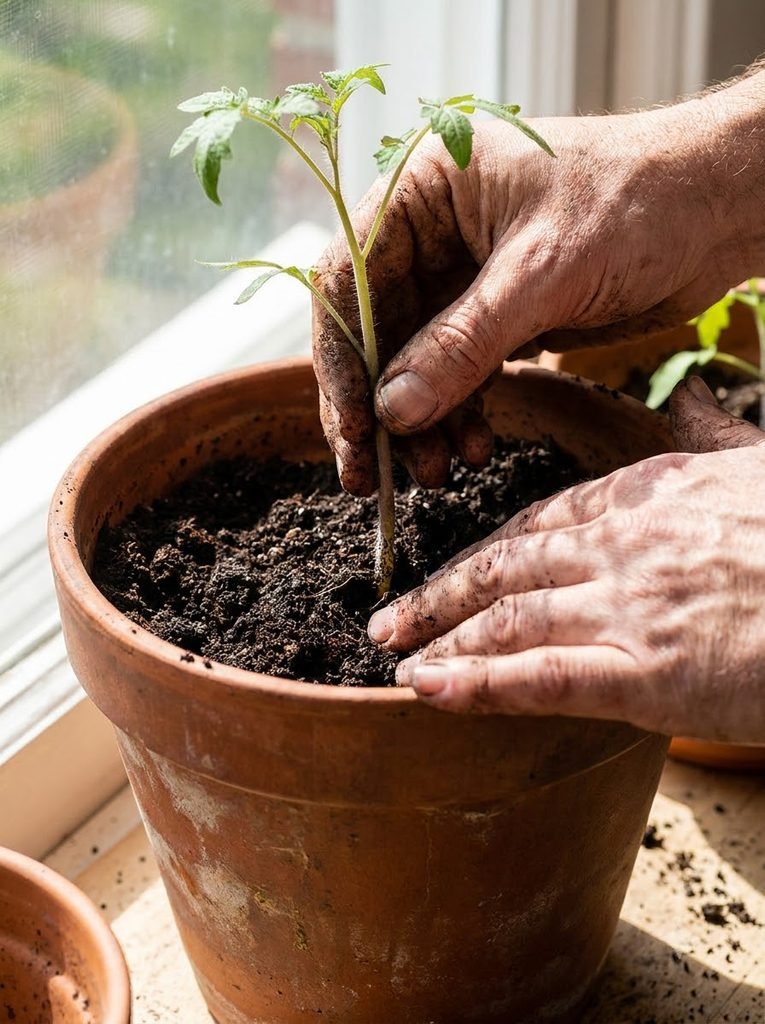
A person gently packing potting soil around the long stem of a tall tomato seedling in a new pot to fix leggy seedlings.
2. Repot Deeper to Fix Leggy Seedlings (The Trenching Method)
If your seedlings are already three or four inches tall with just their tiny cotyledons (the first two embryonic leaves), you cannot simply shrink them back down. The most effective triage is to manually lower their center of gravity by repotting them.
Which Plants Can Be Buried?
This deep-planting method works exceptionally well for tomatoes, tomatillos, and peppers. These plants possess adventitious roots, meaning they have the ability to sprout brand-new roots all along their main stem if it comes into contact with damp soil. Burying a leggy tomato plant not only fixes the floppiness but actually creates a much stronger,more robust root system.
Caution: Do not attempt to bury the stems of cucumbers, squash, melons, or pumpkins. Their stems are highly susceptible to stem rot and will likely die if buried deep in damp soil. For cucurbits, you must rely on correcting the light and airflow rather than deep repotting.
Step-by-Step Emergency Repotting
- Prepare a deeper pot: Fill a clean, slightly larger container (like a 3-inch or 4-inch nursery pot) about one-third full with fresh, slightly damp potting mix.
- Gently extract the seedling: Squeeze the sides of the original seed cell to loosen the soil, and gently slide the seedling out by holding the root ball or a leaf—never pull by the fragile stem.
- Position the plant: Lower the root ball into the new pot. The stem should reach deep into the container.
- Backfill with soil: Gently scoop fresh potting mix around the delicate stem, burying it right up to the base of the lowest set of leaves.
- Lightly water: Water the edges of the pot to settle the soil around the buried stem, ensuring there are no hidden air pockets.
A person gently packing potting soil around the long stem of a tall tomato seedling in a new pot to fix leggy seedlings.
3. Fix Your Grow Light Distance and Duration
“Repotting solves the immediate structural problem, but if you put the plants back into the same environment, they will simply stretch again. To fix leggy seedlings permanently, you must dramatically increase the light intensity they receive.”
The Two-Inch Rule
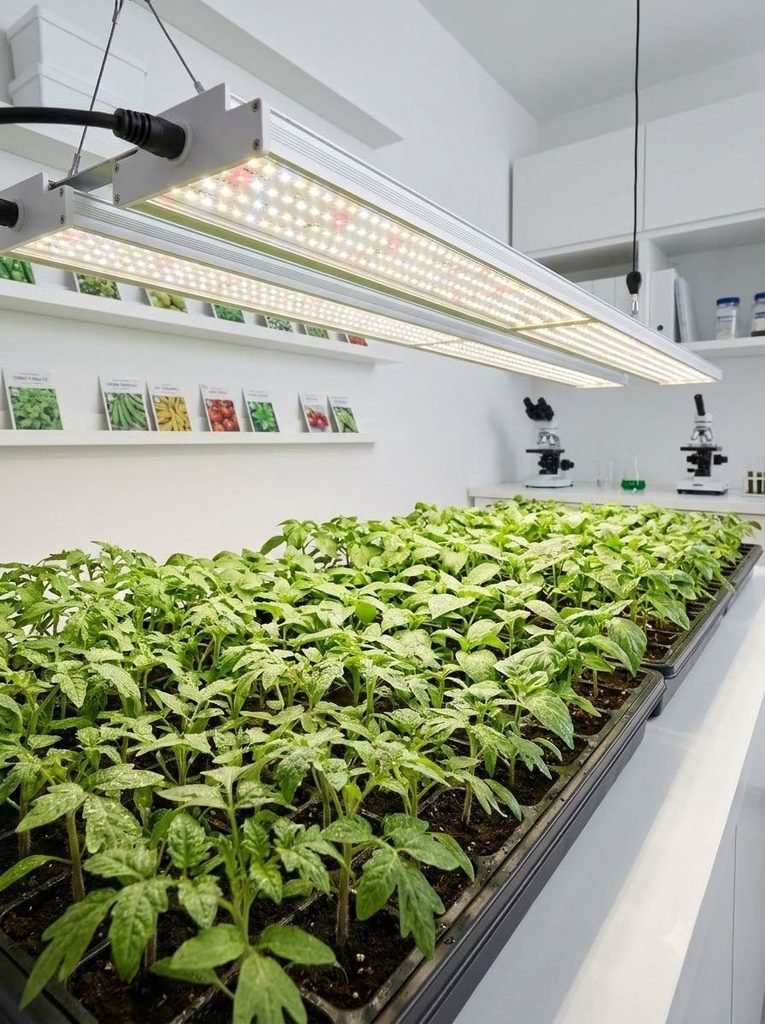
The most common mistake gardeners make with artificial grow lights is hanging them too high. Standard LED or fluorescent shop lights are incredibly weak compared to the sun. To be effective, the light source must be positioned incredibly close to the foliage. As a general rule, your grow lights should hang exactly two to three inches above the top leaves of your seedlings.
As the plants grow taller, you must raise the lights incrementally to maintain that strict two-inch gap. If the lights are positioned a foot or more above the trays, the plants will stretch to bridge the gap.
Adjusting the Light Duration
Seedlings also require a longer duration of light than mature plants. A sunny window might provide six hours of direct light, which is insufficient for a baby plant trying to establish itself. Set your grow lights on an automatic plug-in timer.Your seedlings should receive between 14 and 16 hours of continuous, direct light every single day.
They also need complete darkness to rest and respire. Never leave grow lights on for 24 hours a day, as this will stress the plants, stunt their root development, and cause the leaves to curl or yellow.
LED grow lights hanging very close, just two inches above a tray of young green seedlings to prevent and fix leggy seedlings.
4. Introduce Gentle Airflow to Fix Leggy Seedlings and Thicken Stems
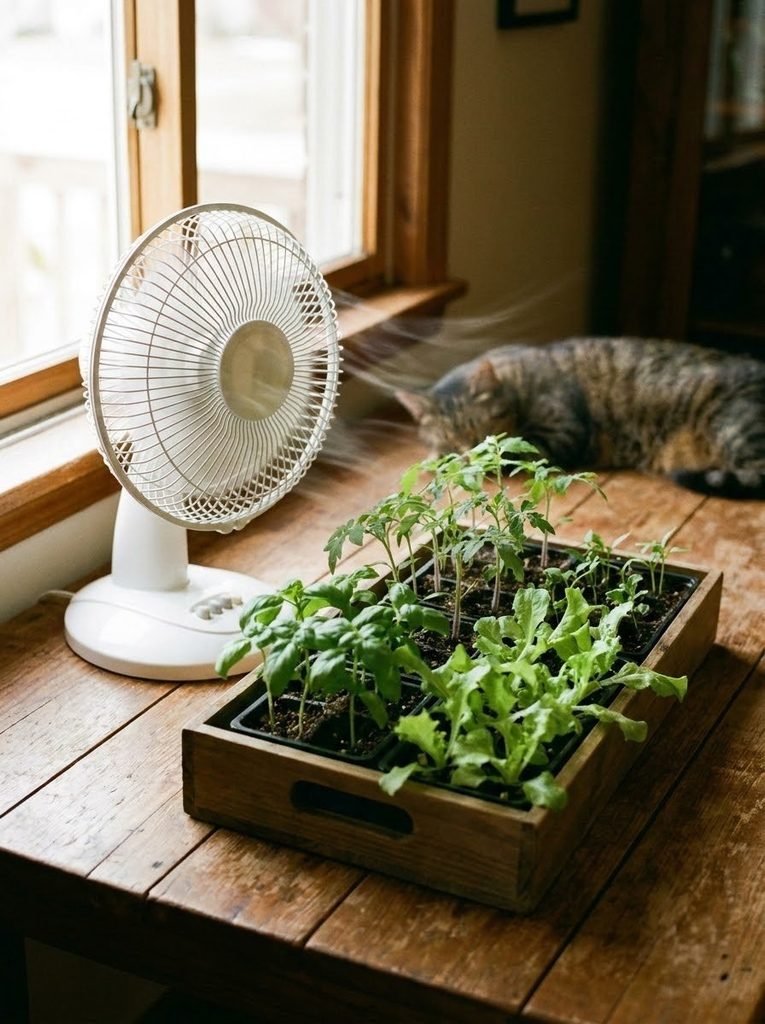
eezes. This mechanical stress causes microscopic tears in the stem tissue. As the plant heals these tears, it reinforces the stem with thicker, stronger cellular walls—much like human muscles building strength after a workout. Indoors, the air is completely stagnant, allowing plants to grow tall without developing any structural integrity.
The Oscillating Fan Trick
To fix leggy seedlings and prevent them from snapping under their own weight, you need to simulate the wind. Purchase a small, oscillating desk fan and set it near your seed starting shelf.
Do not point the fan directly at the plants on a high speed, as this can windburn the delicate leaves and dry out the soil too rapidly. Instead, set the fan to its lowest setting and allow it to sweep back and forth across the room. You want to see the seedlings doing a gentle, constant “dance” in the breeze.
Running an oscillating fan for just two to three hours a day will force the plants to stop dedicating all their energy to vertical growth and start dedicating it to growing a thicker, wider, and more robust main stalk. As an added benefit,constant airflow drastically reduces the risk of fungal diseases forming on the surface of your soil.
5. Adjust Watering While You Fix Leggy Seedlings
When seedlings are stretched and weak, their vascular systems are incredibly fragile. If you have just repot ted them deeply to hide the leggy stems, the buried portion of the stem is now highly vulnerable to fungal infections while it attempts to grow new roots.the final step to fix leggy seedlings is ensuring you do not drown their fragile recovering root systems.”
The Danger of Soggy Soil
The fastest way to kill a recovering leggy seedling is to overwater it. When soil remains completely saturated, the oxygen is pushed out, and fungal pathogens like Pythium and Rhizoctonia thrive. This leads to “dampening off,” a fatal condition where the seedling stem pinches in at the soil line, turns brown, and suddenly collapses.
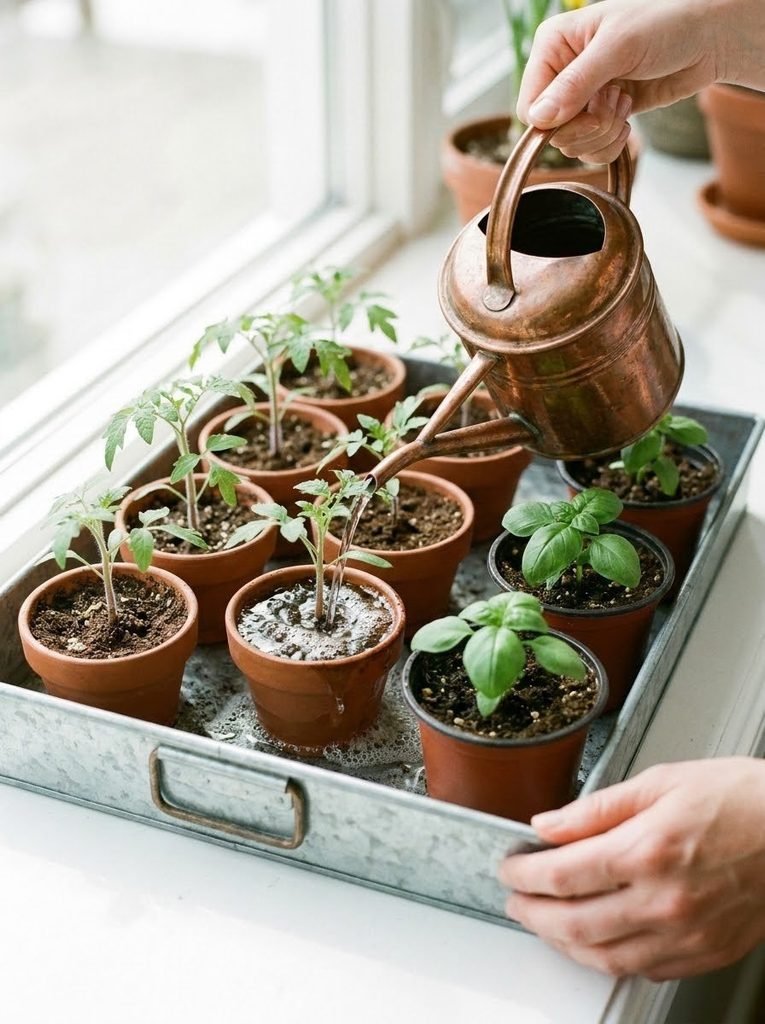
To prevent this, you must shift your watering habits. Allow the top half-inch of the potting soil to dry out completely before you water again. When you do water, try to water from the bottom. Pour a shallow layer of water into the solid tray holding your seedling pots, let the pots soak it up through their drainage holes for thirty minutes, and then pour off any excess water. Bottom-watering encourages the roots to grow downward rather than lingering near the surface.
Withhold Fertilizer
Do not attempt to “feed” your leggy seedlings back to health. Applying liquid nitrogen fertilizer to a weak, stretching plant will only encourage more rapid, floppy, green growth. Wait until the seedlings have stabilized, developed thicker stems, and pushed out their second set of true leaves before introducing a highly diluted, balanced organic fertilizer.
Can you fix leggy seedling after they fall over ?
Can leggy seedlings survive?
Yes, leggy seedlings can absolutely survive if you correct their environment quickly. By providing a stronger light source placed closer to the foliage and repotting deeply root-able plants like tomatoes, they can recover and grow into highly productive adult plants.
Should I pinch off the top of leggy seedlings?
No, do not pinch or prune young leggy seedlings. Snipping the top off a fragile sprout removes its only leaves (which it desperately needs for photosynthesis) and will likely kill it. Save pruning and topping for much older, established plants that already have several sets of true leaves.
Is window light ever enough for seeds?
Usually, no. Unless you have a very draft-free greenhouse or a completely unobstructed south-facing window in a southern climate, standard window light is almost always too weak for light-loving vegetables like peppers, tomatoes, and eggplants, forcing them to stretch.
Why are my seedlings falling over but not tall?
If your seedlings are relatively short but suddenly pinch at the base and fall over, they are not leggy; they are suffering from a fungal disease called dampening off, usually caused by cold, wet,stagnant soil. Unfortunately, dampening off is fatal and cannot be reversed.
Conclusion
Waking up to find your carefully tended seeds looking weak and stretched is frustrating, but it does not mean your growing season is ruined. You can successfully fix leggy seedlings by diagnosing the lack of light, carefully burying the stretched stems of compatible plants, and bringing your artificial grow lights down to just a few inches above the foliage.”