
If you have been browsing through premium interior design magazines or scrolling through aesthetic home decor accounts, you have undoubtedly seen the rise of organic, earthy textures. The “wadi-sabi” aesthetic—which celebrates natural, imperfect beauty—has completely taken over the interior design world.
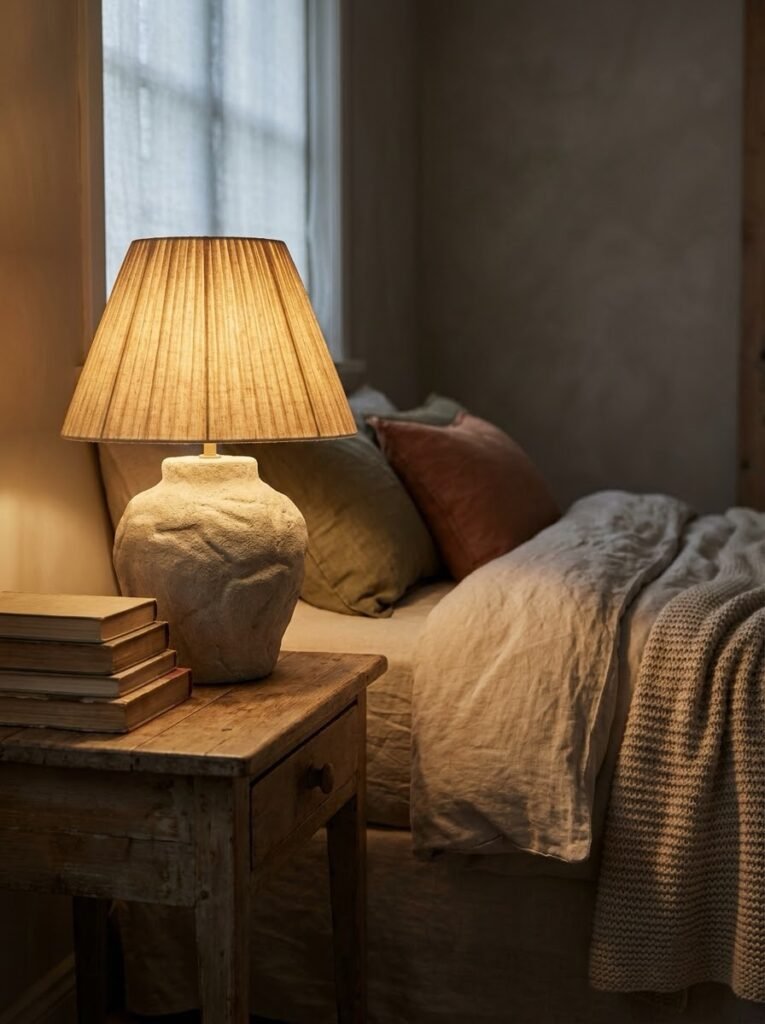
One of the most popular ways this trend is manifesting is through heavily textured, faux-stone, and rustic pottery table lamps. These heavy, artisanal-looking pieces add instant warmth and character to a room. However, walking into a high-end retailer to purchase one of these lamps will quickly bring you back to reality. They routinely retail anywhere from $200 to over $500.
Fortunately, you do not need a massive budget to achieve this curated, designer look. With a cheap thrift store lamp, some basic acrylic paint, and a secret ingredient from your kitchen baking cabinet, you can create a stunning faux-stone lamp in a single afternoon.
The Magic Ingredient: Baking Soda Paint
The secret to this incredible transformation is “baking soda paint.” By mixing standard baking soda into regular water-based paint, you create a thick, gritty paste. When applied to a smooth surface, it dries with a beautiful, matte, chalky texture that perfectly mimics aged ceramic, concrete, or stone.
What You Will Need
- A Thrift Lamp: Look for lamps with great, sculptural shapes (like rounded jugs, urns, or stacked geometric shapes). Ignore the ugly color, dated shiny glaze, or tacky patterns. Focus entirely on the silhouette.
- Matte Acrylic or Latex Paint: Choose earthy, organic colors. Warm beige, muted terracotta, deep charcoal, or creamy off-white work best for the stone aesthetic.
- Baking Soda: Just a standard box from the grocery store.
- A Bristle Brush: Do not use a foam roller. You want a traditional bristle brush to help build up the rough texture.
- Painter’s Tape: To protect the hardware and the light socket.
Step 1: Prep the Lamp Base
Preparation is key to ensuring your new texture actually sticks. Start by giving your thrift lamp a thorough wipe-down with a degreaser or rubbing alcohol to remove years of dust and finger oils.
Once the lamp is completely dry, take your painter’s tape and carefully tape off the metal socket at the top where the light bulb goes, as well as the cord at the bottom. If the lamp has a very shiny, high-gloss glaze, you might want to lightly scuff it with a fine-grit piece of sandpaper to give the paint something to grip onto.
Step 2: Mix the Texture
In a disposable plastic container or an old bowl, pour in your acrylic paint. Now, slowly start adding your baking soda. There is no exact scientific measurement for this; it depends on how much texture you want.
A good starting ratio is 1 cup of paint to 1/4 cup of baking soda. Stir it thoroughly. The mixture will begin to puff up and thicken immediately. You are looking for a consistency similar to thick pancake batter or frosting. If it is too thin, add more baking soda. If it becomes a solid paste that you cannot spread, add a tiny splash of water or more paint.
Step 3: The Application Technique
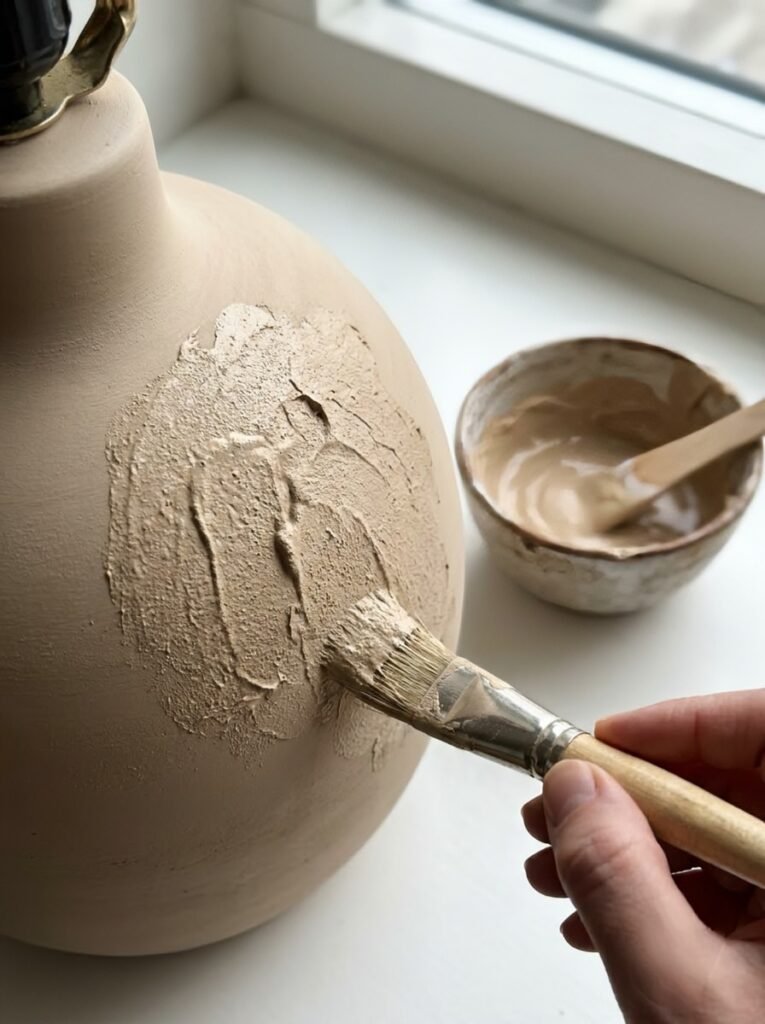
This is where the magic happens. Dip your brush into the thick mixture and start applying it to the lamp.
Instead of using long, smooth, traditional painting strokes, you want to use a “stippling” or dabbing motion. Pounce the brush up and down against the lamp base. This aggressive technique leaves behind beautiful, organic peaks and divots that mimic the natural pitting found in real stone or aged pottery.
Cover the entire base and let it dry completely. Because the paint is so thick, this first coat might take a few hours to dry.
Step 4: Adding Depth (Optional but Recommended)
Once the first coat is bone-dry, you will notice it already looks incredible. However, real stone is rarely one flat, solid color.
To give your lamp that ultra-expensive, authentic look, you need to add a subtle second layer. Mix a tiny amount of a slightly darker (or lighter) paint color with water to create a very thin “wash.” Lightly brush this wash over your textured lamp, and then immediately dab it off with a dry paper towel. The darker wash will settle into the deep crevices of the baking soda texture, highlighting the shadows and creating incredibly realistic depth.
The Final Touch: The Right Lampshade
Your lamp base now looks like a $300 designer piece, but a cheap, shiny white lampshade will immediately ruin the illusion.
To complete the high-end aesthetic, swap out the old lampshade for something with organic texture. A natural linen drum shade or a trendy pleated fabric shade in an oatmeal or beige color will perfectly complement the earthy vibe of your new faux-stone lamp.
Place it on your nightstand or a cozy living room side table, switch it on, and enjoy the incredibly warm, aesthetic glow of your handmade designer decor.